Oct 6, 20266 min read
Search Engine Monthly Recap – September 2026

Here is your monthly summary of the biggest search engine updates to help keep your SEO strategy ahead of the competition. Welcome to the September 2026 review.

September brought a new spam update, major changes to the European search landscape driven by EU regulation, and a growing recognition that AI visibility requires new ways of measuring it. At the same time, we got an important warning about how old pages can still haunt Google's evaluation of a site. Here's the full overview.
Google rolls out global information monitoring in AI Mode
Google is now extending AI Mode's information monitoring to all users globally. It lets people ask Search to continuously track changing information across websites, forums, social posts, real-time data sources, and Google's Shopping Graph.
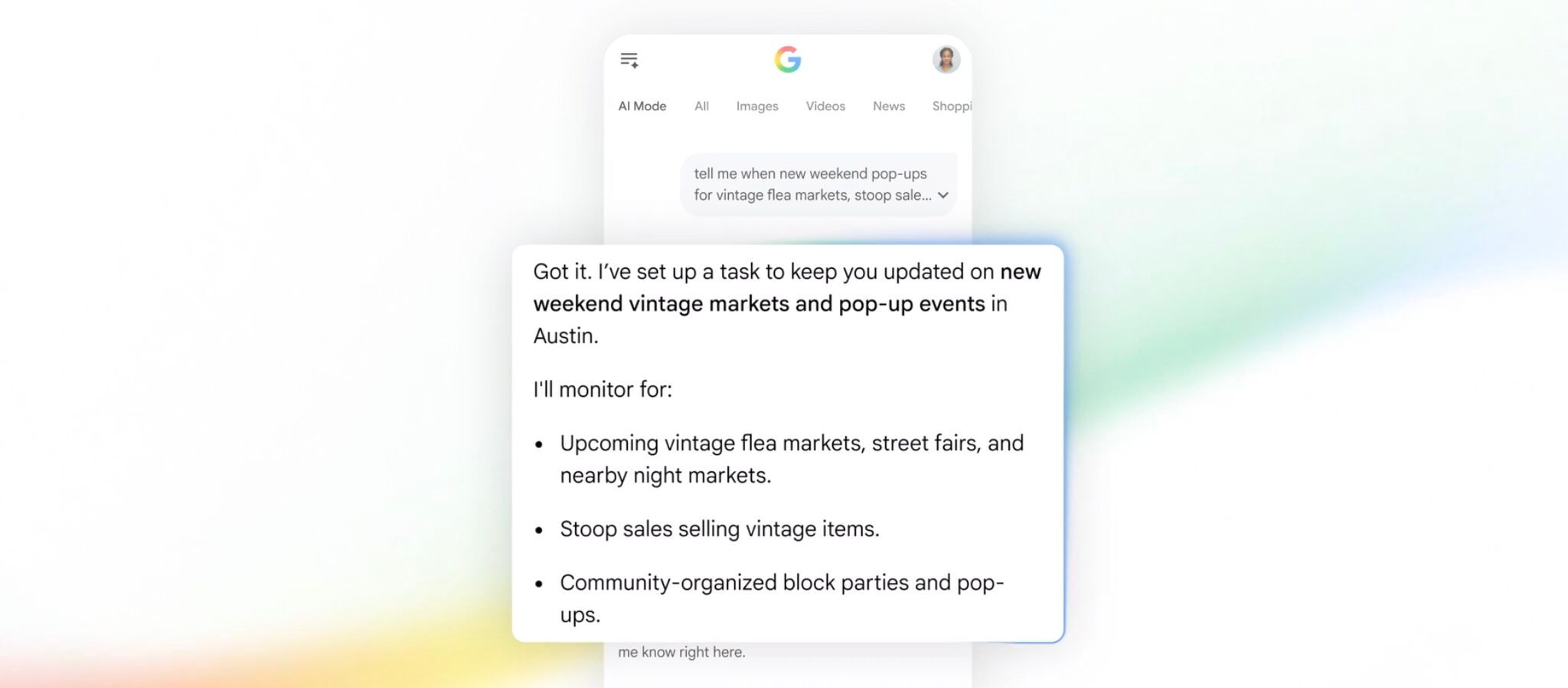
The feature is especially relevant for recurring local and shopping needs, such as new restaurants, nearby events, price drops, and products coming back in stock. It pushes Google Search further away from one-off searches and toward ongoing, AI-driven monitoring.
What does this mean for your business? Make sure local information, product data, prices, stock status, and events are accurate and updated frequently, so Google's AI systems can reliably surface your business when users set up ongoing monitoring tasks.
Google rolls out the September 2026 Spam Update as a new AI spam detector emerges
Google's September 2026 Spam Update began rolling out globally across all languages on September 24, and the rollout can take up to two weeks. Google hasn't specified which spam tactics the update targets, but sites that violate the spam policies risk losing rankings or visibility.
At the same time, Google has disclosed SAFE (Scaled Abuse Forensics Examiner), an AI-driven system already in place that's designed to identify synthetic abuse by analyzing content, behavior patterns, infrastructure, and networks of related publishers. Google hasn't confirmed that SAFE is part of the September update.
What does this mean for your business? Review your domain against Google's spam policies, and prioritize original, useful content over generic AI output. Keep an eye on rankings and traffic throughout the rollout.
Google: outdated pages can still affect a site's recovery
Google's John Mueller says that older, low-value, or programmatic pages can continue to affect how Google evaluates a site, even after those pages have been improved or removed.
That means cleaning up low-quality pages doesn't automatically lead to immediate recovery, since rebuilding Google's trust in a site's overall value can take considerable time and effort.
What does this mean for your business? Review and improve old, low-value content across your entire domain. A tool like Morrison can help here. Prioritize genuine user value over scaled, generic content production, and give Google enough time to reassess the site.
Google adds multimodal search reporting to Search Console
Google Search Console now reports multimodal search separately. It shows how content performs when users search with images through Google Lens, Circle to Search, image upload, and Chrome's "Search with this image" feature. The new filter is available in both regular search results and in the generative AI performance reports.
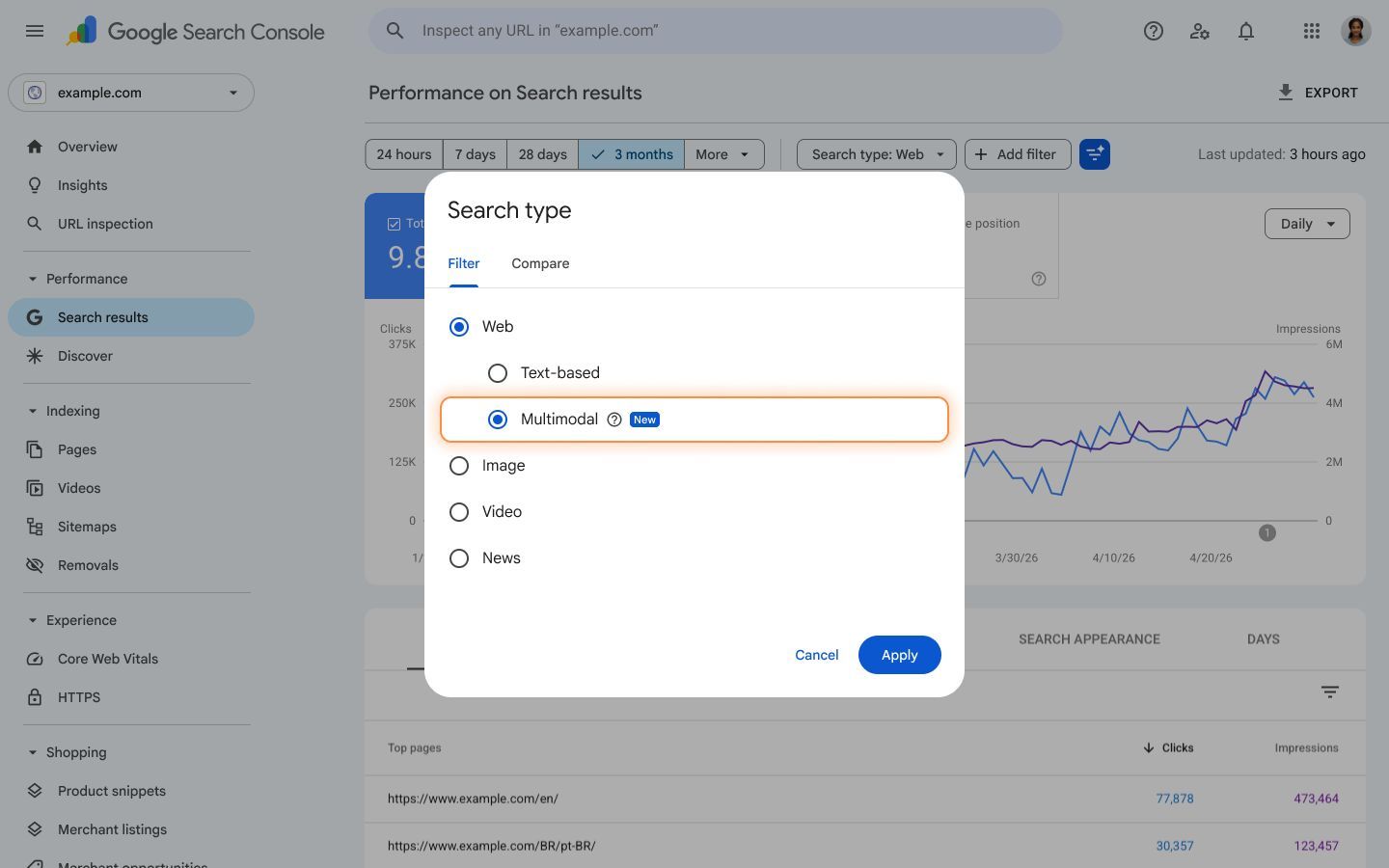
The reporting is rolling out globally and provides clicks and impressions for image-led searches, giving e-commerce and visually driven websites in particular a clearer way to measure the value of visual search and image optimization.
What does this mean for your business? Start monitoring multimodal performance in Search Console. Use the data to identify high-performing pages, and prioritize original, indexable, high-quality images on products and other visually important content.
Google rolls out redesigned search results across the EEA
Google has redesigned commercial search results across the EEA (European Economic Area). Qualified aggregators now get dedicated units for hotel, flight, transport, and product searches, while direct providers get separate placements alongside them.
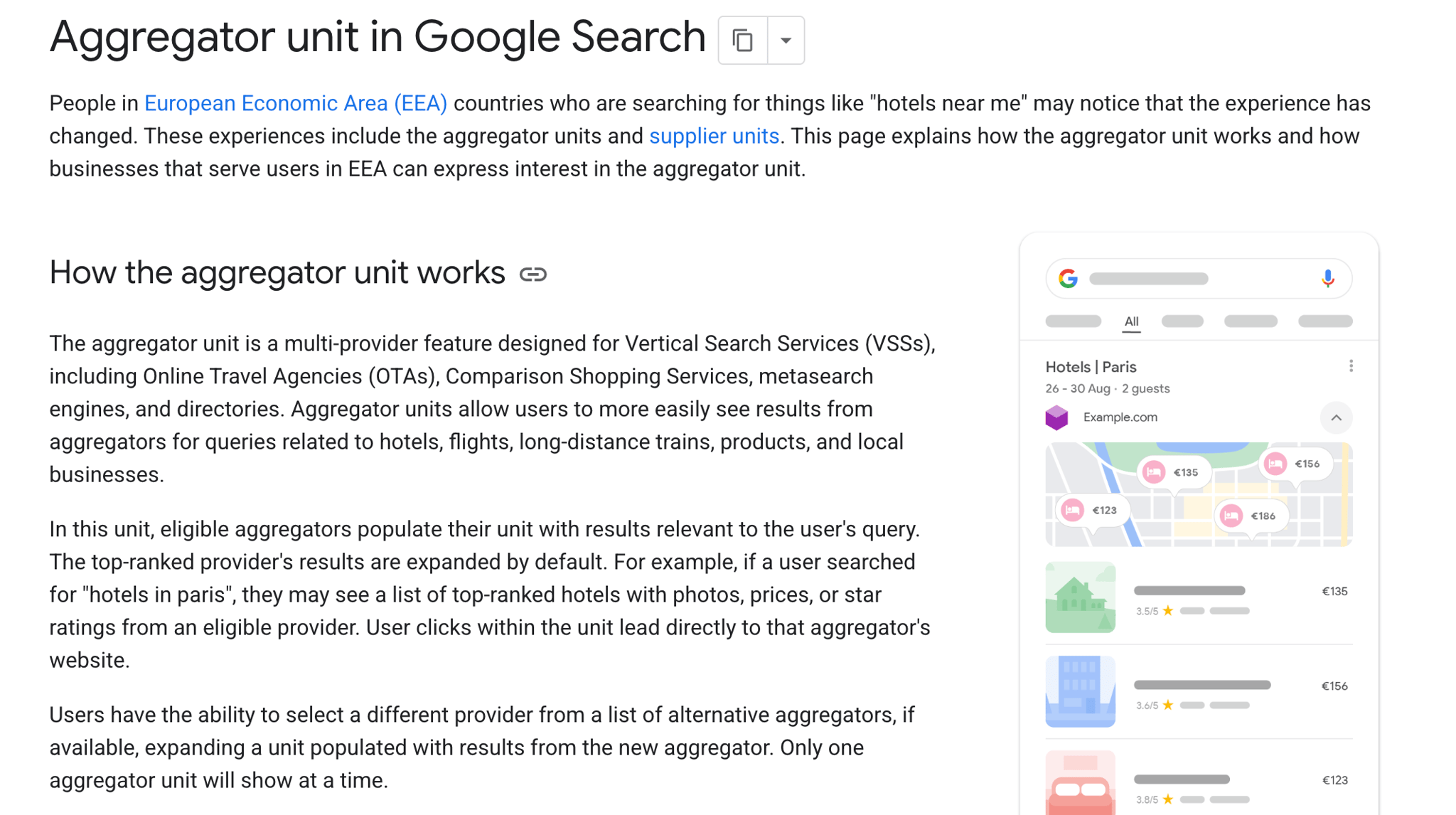
The changes are designed to comply with the EU's Digital Markets Act (DMA) and could significantly change visibility and traffic patterns for comparison services, e-commerce businesses, hotels, airlines, and other direct providers.
What does this mean for your business? Monitor performance in the EEA separately in Search Console, and assess how the new aggregator and provider units affect visibility, rankings, and organic traffic for relevant commercial searches.
Google expands Search Profiles as publisher traffic models evolve
Google has lowered the qualification threshold for Search Profiles to 10,000 followers on YouTube, Instagram, X, or TikTok in the US, while also adding multi-brand management and improved article views. Search Profiles bring together website and social content, and can help followers see more from a source in Discover.
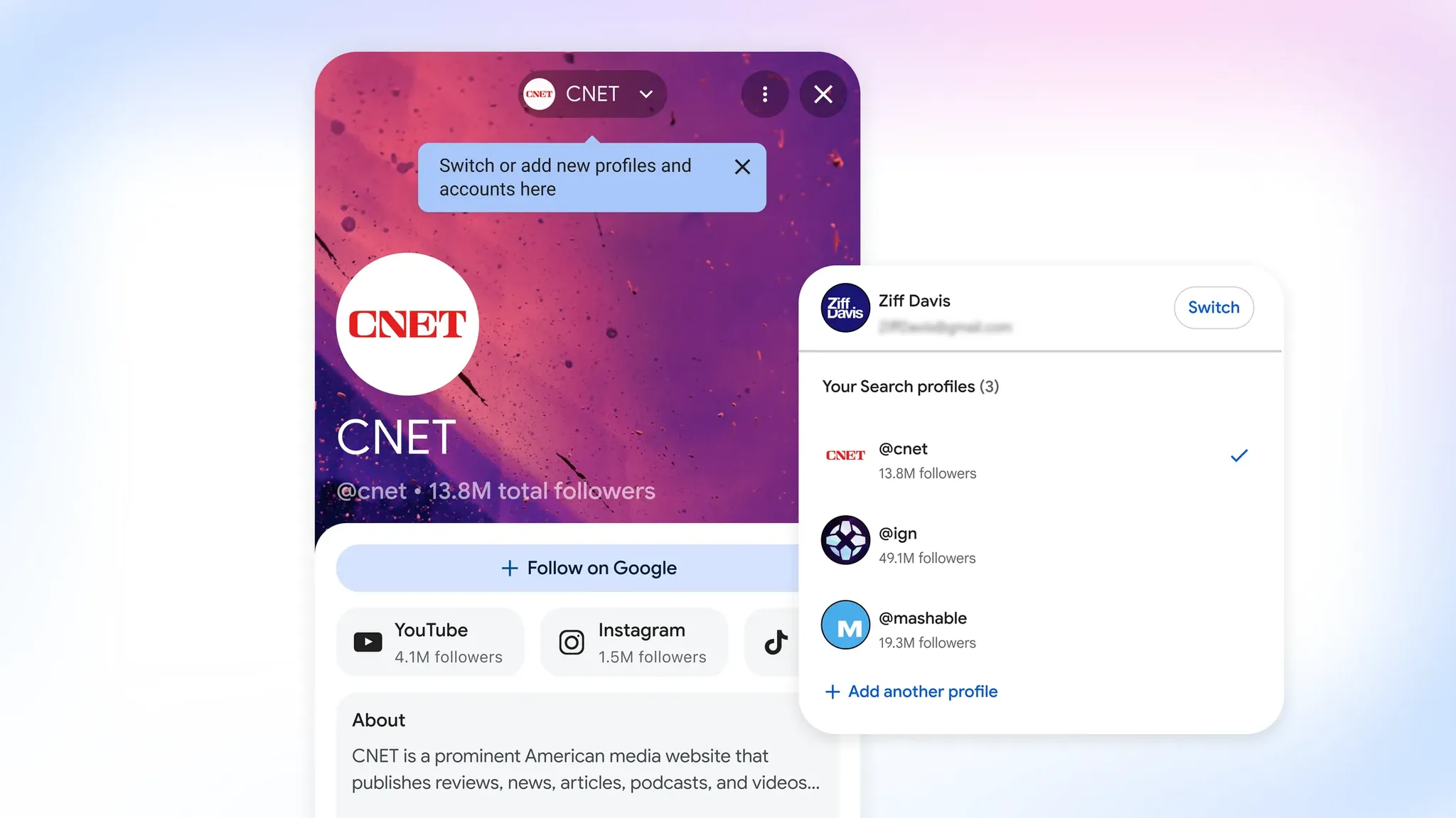
Google has also introduced Search Profile badges, which publishers can add to their websites to direct users to their Google profile. It's part of a broader shift toward building loyalty within Google, as AI Search puts pressure on traditional referral traffic to publishers.
What does this mean for your business? If you operate in the US, use Search Profiles as an additional channel for building audience where it makes sense, while also strengthening direct brand relationships and cross-platform followers rather than relying solely on organic clicks from Google.
Takeaways and recommendations
September cemented a theme that has defined the whole autumn: the way SEO success is measured is changing fast, and interfaces keep improving month after month. We saw this most recently with Google's Information Monitoring.
Google continues its dual approach with the September 2026 Spam Update and the warning that old, low-value pages can hold back a site's recovery for a long time, even after cleanup. It underlines that quality has to be an ongoing discipline, not a one-off exercise.
Finally, the redesign of search results in the EEA under the Digital Markets Act marks an important structural shift for anyone with commercial queries in Europe, one that calls for close monitoring going forward.
Our three most important recommendations for your strategy right now:
- Expand your reporting. Start including leads, pipeline, and AI citations alongside classic traffic, and test whether your most important pages can actually be retrieved by AI platforms.
- Be patient with cleanup. Don't expect immediate recovery after removing low-value pages. Keep improving the content consistently over time.
- Check your European visibility. If you have commercial customers in the EEA, review right away how the new aggregator and provider units in search results affect your traffic.
If you manage to navigate the tension between new AI measurement and solid, classic SEO discipline, you'll be well placed for the rest of the year.
As a specialist SEO agency, we work every day to make sure our clients rank at the top of both classic and AI-based search.