Link Building
Link building is the work of earning authority through links from other websites. Understand what makes a link strong, how links get built in practice, and why they also decide your AI visibility.
Link building is one of the most important disciplines in SEO, and one of the hardest to fake. Classic search engines put real weight on it, and so do the AI interfaces that now sit alongside them: when ChatGPT, Perplexity or AI Overviews decide which brands to name in an answer, they lean on the same web of citations that Google has read for two decades. There is a wide gap between good and bad link building, though, and the difference is worth understanding before you spend a budget on it.
What is link building?
Link building is the practice of deliberately earning authority for your website through links from other websites. Those inbound links are also called backlinks.
When people talk about "building links", the plain version is this: getting other sites to link to yours, so that search engines and language models treat your pages as a credible answer. It rests on what you might call the virtual recommendation. Someone else points at your content and says, in effect, this one is worth reading.
Which means link building rests on content. Nobody links to a page that gave them nothing.
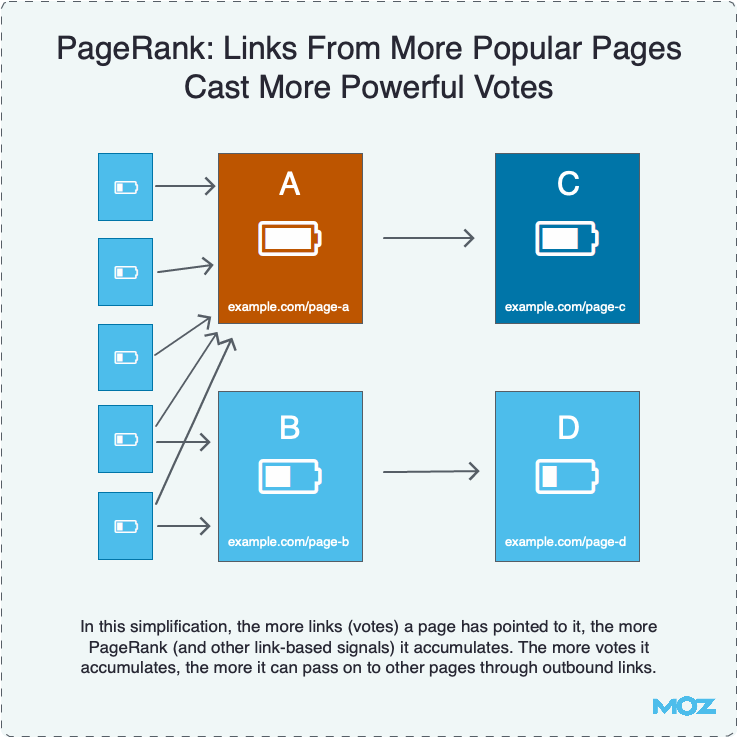
The logic is the same one we use as consumers. The more credible sources recommend a product, the more likely we are to choose it. The more authoritative and relevant sites point at your services, the higher search engines are willing to rank you.
Where do links come from?
From more places than most teams look. A news outlet writing about a topic can cite your study or your guide as a source. A review can link to the product page. An industry blog can reference your data because the number was useful and nobody else had published it.
The goal is not only the signal. A good link also sends people, and traffic from a relevant publication tends to be the most qualified traffic you get all month.
At Bonzer we work with tools that use Domain Rating (DR) to summarize all of this. DR is not a Google metric, but it is built on the same principle Google described when it documented the value of a link. It runs from 1 to 100, where 100 is the most authoritative domain you could hope to be linked from, based on the number and strength of the links pointing at it.
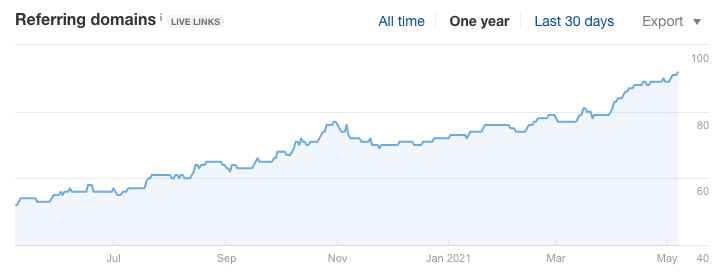
Referring domains over time
Below is what the development of referring domains looks like for a site that is doing the work. Referring domains counts the number of distinct domains linking to you, which is a far more honest measure than the raw link count:
PageRank, and why quality beat quantity
It is worth remembering that links did not always matter. Through the 1990s, when Yahoo was bigger than Google, search engines indexed on content alone.
PageRank changed that, and in doing so it more or less invented the discipline. The illustration below is the classic way of showing how it works:
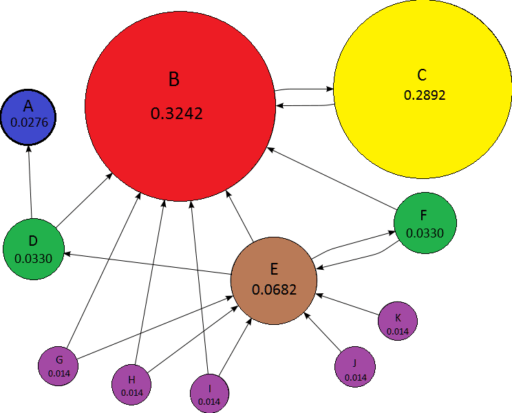
Look at circle "C". It is roughly four times the size of "E", which has many more links pointing at it. C has exactly one link. That one link comes from "B", which is extremely strong and links to almost nothing else, so nearly all of its value flows in one direction.
That is the whole argument for quality over quantity, drawn as a picture. A handful of strong, well-placed links will beat a hundred weak ones, and it has been that way for a long time.
Then relevance was added
Once PageRank was established, a problem remained. Sites could still buy their way up with links from large, generic pages that had nothing to do with their subject. A clothing shop could pick up a link from a car manufacturer and it counted.
Google Penguin ended that, and its logic has since been absorbed into the core algorithm and the spam systems that run continuously. Relevance is now assessed alongside strength: your links have to be strong and they have to make sense.
A good example would be a shop selling high-end menswear that earns a link from a major fashion publication through solid outreach. Strong domain, obvious relevance:

Our rule of thumb is that a good editorial backlink comes from a domain with a DR of at least 20. A DR in the 80s is the kind of link that visibly moves a shop.
Bad link building
Before defining the good version, it helps to name the tactics that are still trying to outsmart the algorithm. There is no official register of bad links, so this list comes from experience and from what search engines have said publicly.
Links from unknown pages with no traffic. If nobody visits the page, nobody sees the link. Low traffic also correlates strongly with a weak link profile, so there is very little value to pass on in the first place.
Untrustworthy links. You do not want your authority resting on sites nobody respects. The review analogy holds: a glowing review from an unreliable source is worth nothing. Bought links belong in this category, because if one company can buy the placement, so can everyone else, and the recommendation stops meaning anything.
Links without relevance. A link that sits completely outside its context adds nothing. The interior shop linked from a car dealership might have counted in 2010. It does not now.
Good link building: the triangle of link building
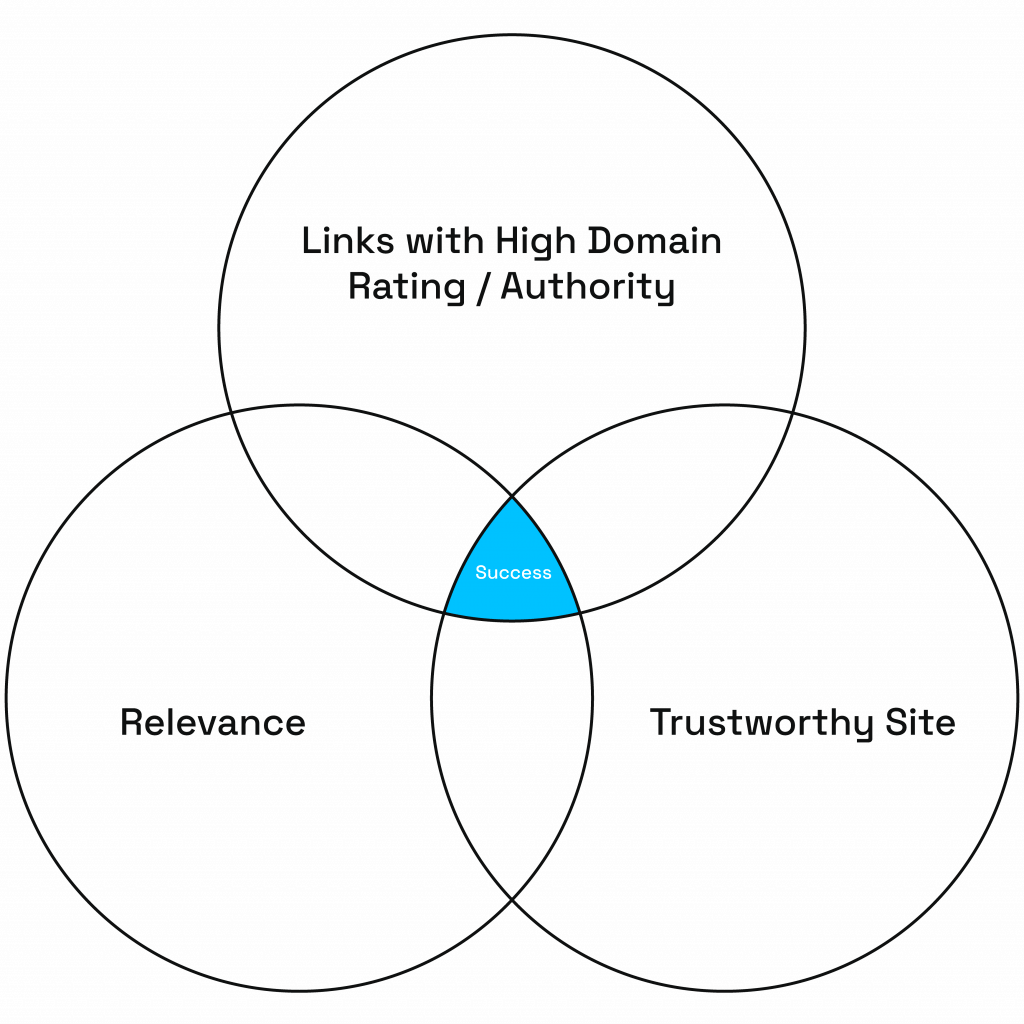
Plenty of people have tried to find the perfect model. Ours is deliberately simple, and we call it the triangle of link building. Follow it and you get the strongest links available to you while staying well clear of penalties.
Good link building means links that:
- Come from a domain with high authority (Domain Rating)
- Come from a site people trust
- Appear in a relevant context
Authority because Domain Rating is built on link strength, and a domain has to have value before it can pass any on. Trust because credibility is transitive, and because the harder a link is to get, the more it is worth when you finally get it. Relevance because the mention has to make sense: a blogger writing about summer fashion linking to summer dresses is a link that reads as natural to a human being, which is the only test that has ever really mattered.
Put it another way. Would you rather have ten positive reviews from anonymous sites with no readers, or one from a national newspaper? The answer is obvious, and it is also how search engines think about your profile.
So the question to ask about any link opportunity is this: would I want this link if search engines did not exist?
How do you actually get started?
There is a lot to know before you go out and build links, and it is not a ten-minute read followed by execution. It takes knowledge, and it takes a network or a back catalogue of relationships. If you happen to know someone running a publication in your niche, call them. Most teams run out of those relationships quickly, which is why outreach is the core skill.
Outreach means contacting the people and companies whose pages you want a link from, with something worth their time. In practice that is usually one of two things: a guest contribution that gives their readers something useful, or a source reference where your research answers a question their existing article raised. Original data, tools and infographics are the assets that earn the most links, because they give the other side a reason to publish.
Digital PR is where we spend most of our own effort. Press material built on original research, a genuinely new number, or a story only your company can tell. When media and authoritative sites cover it, they link. That lifts your Domain Rating, your credibility and your presence in AI answers at the same time, because a brand that gets written about is a brand the models have read about. The method is laid out in digital PR.
Can you buy links?
We get asked constantly, and the answer has two halves.
Do not buy links from sites that sell links. Those are typically PBNs, private blog networks built for no purpose other than linking to each other. It is a direct breach of search engine spam policies, and the systems that detect it have had many years of practice.

Technically, you can pay for placement in the form of sponsored articles, as long as they are disclosed as sponsored and marked so the link does not pass endorsement. That is advertising, and it can be a perfectly reasonable spend. It is not link building, and undisclosed paid links break both platform policy and, in most markets, advertising law.
What you can buy is the work. An agency doing outreach earns links that are natural because the relevance is real.
How natural link building shows up in the numbers
Below is a domain whose Domain Rating was built organically. Note that it has around 100 referring domains, which is more than enough for a strong profile when the domains are the right ones:

And here is the correlation between new links and organic traffic for Artland over a single month:
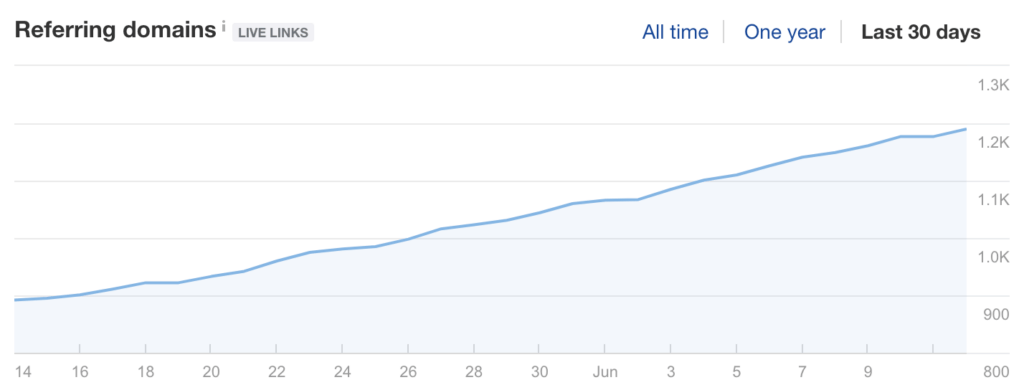
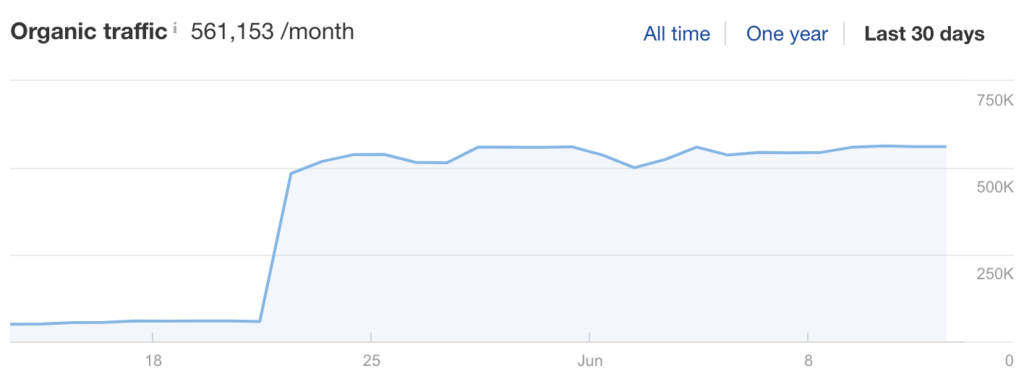
Rankings moved in step with the link growth. Nobody can be completely certain about the algorithm, but relevant, natural links from authoritative sites move mountains often enough that we plan around it. The full story is in the Artland case.
Link building in AI search
Google is no longer the only place your visibility is decided, and link building carries over more cleanly than most disciplines.
The pattern is consistent: the more authority and recognition your site accumulates through links, the more the language models treat it as a source worth naming. When respected sites reference you repeatedly, that repetition is what the models have learned from, and it shows up as your brand appearing in answers.
The objection we hear is that AI search sends less traffic than Google. Often true. It misses the point. When your company is named in an answer, the user has seen and registered it, whether or not they click. People act on recommendations from an assistant they trust, and that trust is built on the same signals you were already working on.
Link building is a discipline within SEO built on creating authority for a website through links from other sites. A link works as a recommendation of your content, and search engines and AI models both use it when deciding which sources to trust and surface.
Strong links come from consistently producing content worth citing, and then making sure the right people see it. That means original research, useful data and formats other sites want to reference, promoted through outreach so the relevant publications know it exists.
Start with a link analysis of your own profile and your competitors', so you know which domains are realistic and which gaps are worth closing. Then work by the triangle of link building: authority, trust and relevance. If you would rather not build the network yourself, this is one of the disciplines where an agency earns its fee.
It depends on how strong a domain you need and how competitive your industry is, which is why we talk through the requirement before pricing anything. A few well-placed links can be enough to lift visibility in a narrow market, while a competitive category needs a sustained programme.
Go deeper with link building
- Link analysis – map your link profile, understand Domain Rating and referring domains, and benchmark against competitors before you build.
- Digital PR – create the stories and data that media cover and link to of their own accord.
- Anchor text strategy – how anchor text tells search engines what your pages are about, without tipping the profile into over-optimization.
- Internal link building – once the authority is there, the internal structure decides where it goes.
Want us to build the links?
Our team works with digital PR and media coverage every day. Read more about link strategy as a service, or start with a free SEO analysis, where your link profile is one of the things we go through.