How Microsoft Copilot Works
Microsoft Copilot grounds its answers in Bing. Understand how Copilot picks sources, why the B2B angle is different, and how you become part of the answer.
Microsoft Copilot is the AI assistant most people meet during working hours. It sits in Windows, in Edge, in Bing and inside Microsoft 365 itself: Word, Outlook, Excel and Teams. That makes it unusual among the AI surfaces. Copilot is not somewhere you go, it is a layer on top of the tools your customers already have open all day.
When a buyer, a controller or a marketing lead asks Copilot about suppliers, software or pricing, they get a composed answer with citations. The only question that matters for you is whether your company is one of the sources.
The Bing foundation
Copilot does not browse the web on its own. When a question needs current knowledge, it retrieves results from the Bing index and builds the answer on them. That is called grounding, and it has a blunt practical consequence: if you are not indexed in Bing, you do not exist for Copilot.
This is where a lot of companies quietly lose visibility. Bing has spent years as "the other search engine" that nobody prioritized, so it is common to see sites with strong Google rankings that trail badly in Bing simply because no one ever looked. We cover the wider picture in our guide to alternative search engines.
The foundation itself is not complicated:
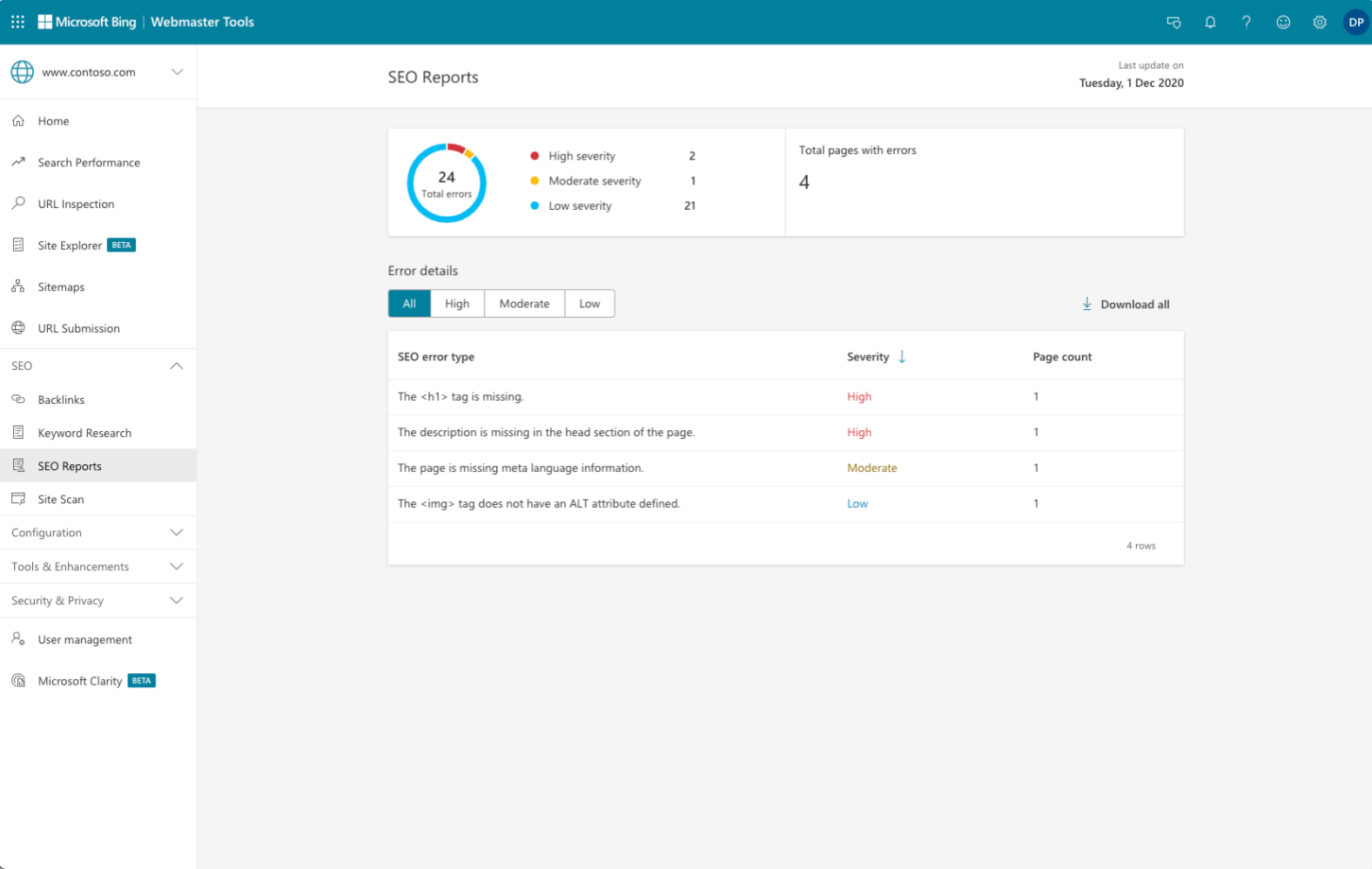
- Bing Webmaster Tools. Add your site, verify it and check the indexing status. The tool is free, and it shows you which of your pages Bing actually holds, along with your backlink profile, query data and technical errors.
- IndexNow. Bing supports the protocol that lets you push new and updated URLs straight to the index instead of waiting for the crawler. For sites publishing continuously, it is the fastest route to getting fresh pages into Copilot's source pool.
- Technical health. Crawlability, a sensible site structure and correct canonicals matter in Bing exactly as they do in Google. A technical audit usually catches both in the same pass.
Where Bing differs from Google
The two algorithms overlap heavily, and both weight backlinks, keyword relevance and content quality. A few differences are worth knowing when you are optimizing for the index Copilot reads.
Bing has always been more literal about keywords. Having the target term in the title tag, the H1, the first paragraph and the URL carries more weight than the equivalent does in Google, where semantic matching does more of the work. Bing also reads engagement more directly, watching for pogo-sticking, where a user clicks a result and bounces straight back to try another. And it has historically given more credit to social signals than Google does, so content that gets shared and discussed tends to be rewarded.
None of that argues for a separate Bing strategy. It argues for making sure the pages you care about are explicit about what they cover, and that Bing can reach all of them.
How Copilot picks its sources
Once Copilot has retrieved results, the language model writes an answer and cites the pages it built that answer on. There is no published formula for the selection, but the pattern is clear enough when you work with it:
- Pages that answer the question directly get cited. Copilot is looking for passages it can lift into an answer. A page that defines, explains or compares in plain terms is easier to quote than one that circles the subject for four paragraphs first.
- Structure helps the model read you correctly. Descriptive headings, short paragraphs and tables where numbers belong make it obvious what each section answers.
- Clarity about who you are. Consistent company details across your site, LinkedIn and industry directories make it easier for both Bing and the model to connect your brand to your field.
The difference from classic search is worth sitting with. You are no longer competing for a position next to nine other results, you are competing to be part of the answer itself. That rewards precision far more than volume.
The B2B angle: search moved into the working tools
What makes Copilot strategically interesting is the distribution. ChatGPT is something you choose to open. Copilot comes with the Microsoft licence that most businesses already pay for. When research into new suppliers, tools or partners starts in the same window as the inbox and the spreadsheet, part of your customer journey is happening somewhere classic rank trackers never look.
For B2B companies that means two things. First, Copilot visibility is in practice Bing visibility plus citability, and because so few competitors work on it deliberately, a focused effort moves more here than the same effort would in Google. Second, the questions people ask an assistant are longer and more specific than classic searches: "which agencies in the Nordics specialize in technical SEO for ecommerce" rather than "seo agency". Your content has to answer that kind of question end to end, including the parts about scope, process and fit that most service pages leave out.
Getting started
Ask Copilot the questions your customers would ask, and see who gets cited. It is the fastest reality check available, and it takes ten minutes. The systematic version of the same exercise, run on a fixed set of prompts over time, is described in our guide to LLM monitoring.
Then fix the Bing foundation and make your most important pages quotable: the definition near the top, the numbers in a table, the sender named. If you want that work done with you, generative AI optimization is the delivery area for it, and our free SEO analysis covers both classic search and the AI surfaces so you can see where you currently stand.
Copilot is not the future in the vague sense. It is already open on the screen of your next customer.