Content Marketing
Content marketing is the cheapest route to qualified traffic. Get the method behind purpose, audience, formats and the pillar-cluster framework that ranks.
Content marketing is the strategic use of guides, comparisons, video and other content that creates real value for the people visiting your site. The point is to use genuinely useful material to reach your audience, and eventually to have them convert. It is one of the cheapest routes to qualified traffic there is, because the same page keeps working long after it was published.
Before you produce anything, one question is worth answering honestly: what does the reader get out of this? The value can be entertaining, informative or problem-solving. If you cannot name it, the page is not ready to be written.
Pull rather than push
Most marketing plans contain both push and pull. Push marketing sends your message out to people who did not ask for it: video ads, banners, paid social. It usually interrupts them while they are doing something else.
Pull marketing draws people to you instead. SEO and content marketing are the clearest examples. Someone types a question, finds your guide, and reads it because they wanted the answer. Nothing was interrupted, and the attention is genuine.
That difference is why content built for search converts as well as it does. You are not persuading people to become interested. You are meeting people who already are, at the moment they went looking.
Google calls that moment the Zero Moment of Truth: the research that happens before a purchase, and that has become the norm as buying moved online. Buyers compare products, look up problems, and form an opinion about you before they ever contact you. You have to create value for your customers before they are customers.
What a content strategy has to answer
A working content strategy answers five questions. Most content that underperforms failed at one of them long before anyone wrote a word.
1. What is the purpose? Your content serves two goals at once: one for the business and one for the visitor. On the business side, decide whether the piece exists to build visibility, collect newsletter signups, or drive a direct sale, and set the KPI accordingly. On the visitor side, the reference point is search intent, the reason someone made that particular search. Get the intent wrong and the page can rank without ever converting.
2. Who is it for, and where are they? Not everyone in your audience is at the same stage. The funnel is a useful shorthand: top-of-funnel content catches attention from people who do not know you, middle-of-funnel content teaches and builds trust, bottom-of-funnel content answers the last objections and asks for the decision. Map your existing pages against those three, and the gaps are usually obvious.
3. What format is it in? Text, video, downloadable templates, infographics, comparison tables. The format follows the question, not your production habits. A pricing comparison wants a table. A setup process wants a video or a set of screenshots.
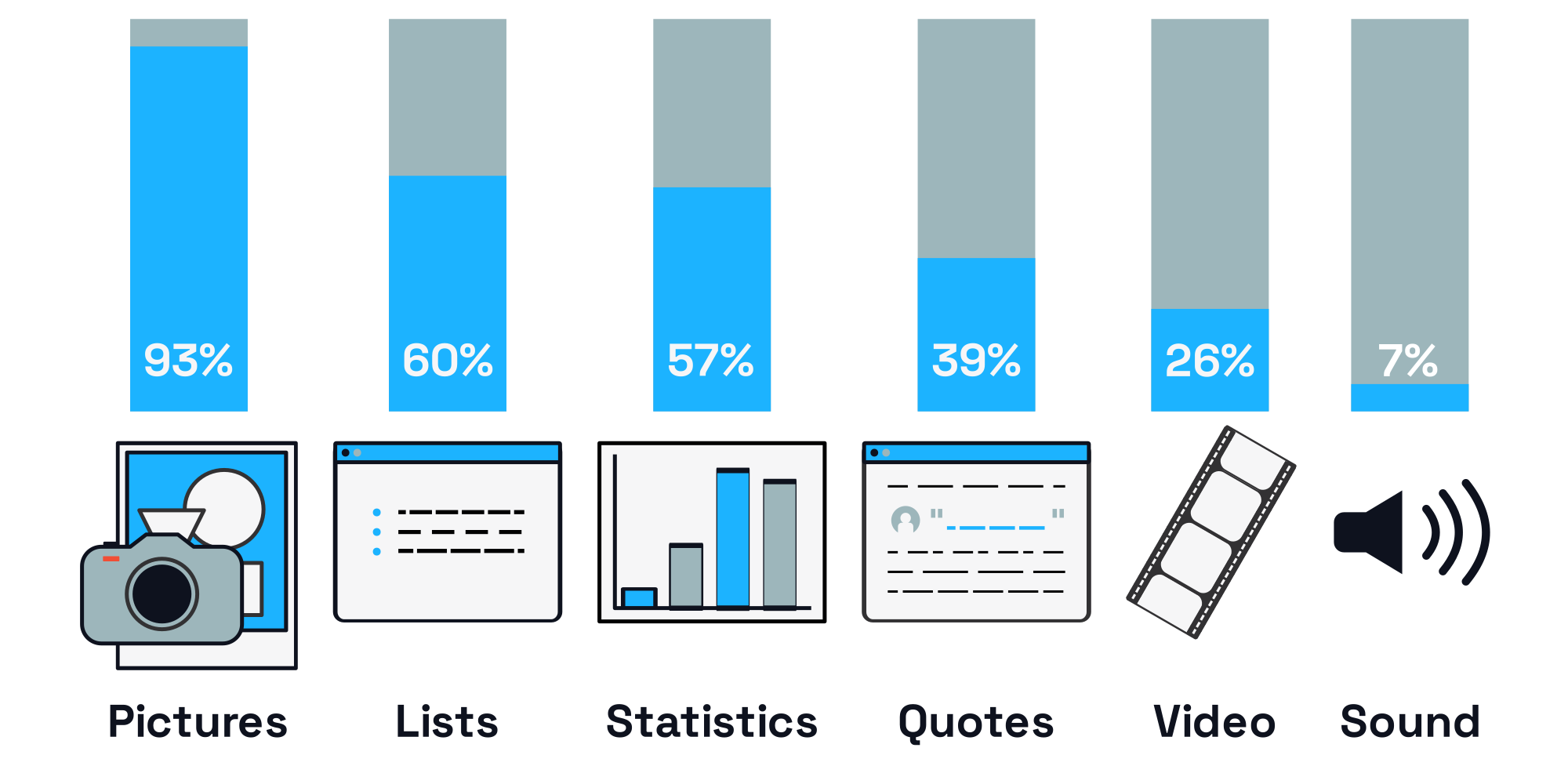
4. Which channel does it go out on? Search is the channel where content keeps earning after publication, which is why we build most content programs around it. Email and social are distribution: they give a piece its first audience, and search gives it the next three years.
5. How do you evaluate it? Traffic tells you the reach, engagement tells you whether it landed, conversions tell you whether it mattered. Track all three per piece, not just in aggregate, or the two pages carrying the whole result stay invisible.
The practical version of all five, with a publishing rhythm and a backlog, is what we cover in how to build a content plan.
The pillar-cluster framework
Individual good articles rarely add up to authority on a topic. Organizing them does, and the pillar-cluster framework is the structure we use.
A pillar is one comprehensive page on a central topic. Around it sit cluster pages, each covering a subtopic in more depth, all linked to the pillar and back again. If you sell outdoor gear, the pillar could be a full guide to choosing hiking boots. The clusters would be the different boot types and their trade-offs, reviews of the top-rated models, a round-up of brands, and a piece on fitting and caring for boots so they last.
Four things happen when content is organized this way. Search engines get a clear picture of how your pages relate to each other. You cover a topic thoroughly enough to be treated as an authority on it rather than a passing mention. The internal links between pillar and clusters make the whole group easier to crawl and pass authority to the pages that need it. And each cluster page attracts more specific traffic, which converts better than broad traffic does.
The structure only works if the topic choice is grounded in data, so the framework starts with keyword research rather than with a brainstorm.
What "high quality" actually means
"High quality" is a phrase that gets used loosely. In practice it comes down to five things you can check on any page you publish:
- Relevance. It addresses the need behind the search, not the topic in general.
- Accuracy. The claims hold up, the numbers are sourced, and the piece has been updated since it was written.
- Clarity. Plain language, short paragraphs, jargon explained the first time it appears.
- Structure. Descriptive headings, a logical order, and the answer near the top rather than buried after the background.
- Optimization. The target keyword in the title, in at least one subheading and in the meta description, with alt text on the images.
The same list is what makes a page citable in AI search. Language models look for passages they can lift into an answer, so a page that states things clearly and attributes them to a named sender gets quoted more often than one that circles the subject.
From content to customers
Traffic is the middle of the job, not the end of it. Once the pages rank, the work moves to whether visitors do anything: the offer, the calls to action, the friction on the page. That is conversion rate optimization in content, and it is usually where the fastest additional revenue is sitting.
If you want the whole chain handled, from analysis and topic selection through production and publishing, our content subscription covers ongoing content production built on the same method. And if you would rather see where your content stands first, our free SEO analysis maps your current visibility and which pages are closest to a win.