Affiliate & Commercial Content SEO
Affiliate marketing runs on organic search. Get the model, the numbers that matter and the mistakes both advertisers and publishers make on commercial content.
Affiliate marketing sits alongside email, display and paid search as a marketing channel, with one difference that changes everything: you pay after the result, not before. A commission falls due when a defined action happens, normally a purchase or a form submission. In practice you are outsourcing part of your marketing to partners who only earn when you earn.
The reason affiliate belongs in a SEO knowledge hub is simple. Around 70% of affiliates use organic search as their primary traffic engine, which means the affiliate channel is largely a search channel wearing a different name. Search a phrase like "best cordless vacuum" and the top three results are usually affiliate sites competing on who writes the most convincing comparison.
Want to see where your commercial pages stand? Request a free SEO analysis
The five roles in the model
- The advertiser runs the affiliate program. Usually an online shop or a subscription business.
- The publisher (the affiliate) promotes the product and places a tracked link. When a visitor buys, the publisher earns a share of the revenue.
- The affiliate network handles tracking and payouts as a third party, and takes a cut of the commission for doing so. Awin, Adtraction and Partner Ads are common in the Nordics.
- The affiliate program is the agreement itself: commission rates, payment terms and which actions trigger a payout.
- The customer clicks the link and buys, usually unaware that the purchase also pays a commission.
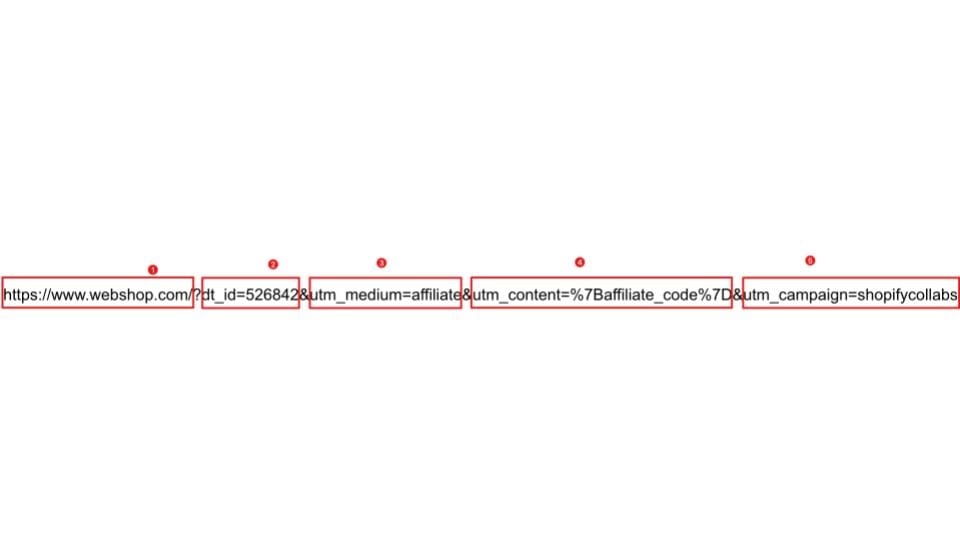
Tracking runs on unique links and cookies. An affiliate link looks much like a URL with UTM parameters bolted on: a base URL, an affiliate ID that attributes the sale, and campaign parameters that let you separate affiliate traffic from everything else in your analytics.
Commercial search intent is the whole game
Affiliate pages live in the commercial and navigational part of search intent, which is why they start with a keyword analysis rather than a product list. Someone searching "best gaming laptop" is not ready to be sold to. They want a recommendation they can trust, because they do not have a friend who knows laptops. Whoever gives the clearest, most credible answer earns the click and the commission.
That is why the winning affiliate pages read like advice and not like advertising. They compare real options, they say what a product is bad at, and they show that someone actually used it. This is also the reason Google's E-E-A-T signals matter more on commercial content than almost anywhere else: product reviews and buying guides are exactly the category where first-hand experience is the differentiator. A named reviewer, original photos, measured test results and a stated method separate a page that ranks from a page that recycles the manufacturer's own copy.
The same logic now decides who gets quoted in AI answers. When ChatGPT or Google's AI Overviews answer "which project management tool suits a small agency", they build the answer from sources that read as independent assessments. Original testing gives you something the models cannot find anywhere else, and that is what makes you the citation rather than the background noise.
The numbers worth knowing
Two payout models dominate. CPS (cost per sale) is standard for online shops, either as a percentage of order value or a fixed amount per order. Many advertisers use differentiated rates to push specific products. CPL (cost per lead) is standard for SaaS, subscription and lead generation businesses, with a fixed rate per form submission or call.
The single most useful metric for a publisher is EPC, earnings per click:
EPC = total commission / total clicks
EPC is how you compare one affiliate program against another. It is a calculation rather than a promised price, so nothing guarantees you earn it. Your own EPC depends almost entirely on how warm and how well qualified the traffic is that you hand over, which puts conversion optimization at the center of the work. For advertisers, average EPC across your existing publishers is the number serious affiliates check before they join your program, so a program that converts badly struggles to recruit good partners.
Four mistakes advertisers make
Allowing discount code affiliates unchecked. A shopper already in your checkout opens a new tab, finds a code on a coupon site and completes the purchase. The coupon site takes a commission on a sale you had already won. For some journeys this works. For many it simply moves margin out of your business while making the channel look like it performs. Set the rules in your program terms rather than discovering the pattern in a report six months later.
Ignoring deduplication. If you run your program across several networks, two publishers on two networks can each drop a cookie and both get paid for the same sale. Solve this before you add the second network, not after.
Not curating partners. Affiliate marketing means giving up some control over how your brand is presented. If you are brand-driven, approve publishers manually and write presentation guidelines into the program.
Never talking to your affiliates. Treat them as your sales force. Tell them what is selling, which arguments work, and what launches are coming. Give them images, video and product data. Every hour spent here shows up in their EPC and in your revenue.
Three mistakes publishers make
Selling instead of helping. You are the recommendation, not the sales page. The moment the copy tips into advertising, the reader leaves and the ranking follows.
Not knowing the product. If you have only read the manufacturer's description, you have nothing new to say. Buy the product, request samples, or get data from the advertiser. This is the difference between a page that survives a core update and one that does not.
Promoting too many products. Twenty options create the same paralysis as an endless streaming catalog. Curate a short list for a specific audience and explain the trade-offs.
The best starting point as a publisher is your own edge: a category you genuinely know, where your experience is the content. It is also the most durable position, because it is the part nobody can generate.
Commercial content is where organic search meets revenue, and it is the part of a site that rewards depth fastest. If you want a picture of how your commercial pages perform in classic search and in AI answers, that is what our free SEO analysis is built to show, and content production is where we take it from there.