AI in SEO
AI changed how people search and how SEO gets done. See why classic search and AI search run on one foundation, and where AI earns its place in the work.
AI changed two things about SEO at the same time: how people search, and how the work gets done. Both are large shifts, and both get flattened in the retelling. This page separates what is genuinely new from what only got a new name.
One dynamic, several surfaces
Search now runs across Google, AI Overviews, ChatGPT, Copilot and Perplexity. Seen from the user's side, nothing broke. People still ask questions, still compare options, still look for companies they can trust. Classic search and AI search are the same dynamic behind different interfaces.
That is why SEO carries more weight now, not less. The foundation that decides your visibility in classic results also decides which companies the models find, cite and recommend: a site that can be crawled, entities a machine can resolve without guessing, authority you have earned, and content that answers real questions. There is no one discipline for Google and a separate one for ChatGPT. There is a single foundation with several surfaces on top of it, and the AI search pillar takes the surfaces one at a time.
What is actually new
Three things set an AI answer apart from a page of ten results.
- Answers instead of lists. The user gets one composed answer, often without clicking through to anyone. Value moves from the click to the mention: being the company the answer names.
- Conversation instead of keywords. "SEO agency Copenhagen" becomes "which SEO agency in Copenhagen is strongest on B2B?". Content that answers a whole question with context beats content built to hit a phrase.
- Your whole footprint counts. Models assemble their picture of you from everything available: your site, reviews, brand mentions, the professional work your people put their names on. Consistency across those sources is a signal in itself.
E-E-A-T gained its extra E exactly when AI arrived
Look at the timing. The moment generative AI made it possible to produce content in unlimited volume, Google widened E-A-T with a second E, for Experience. That was no accident. The more content a machine can manufacture, the more valuable the part only you can write: first-hand experience, your own data, positions you can defend with evidence. Experience is the one input a model cannot generate its way to, which makes it the strongest counter-move in a market where text has become cheap. Our walkthrough of E-E-A-T covers how to show it on the page rather than claim it.
The August 2023 core update put a price on getting this wrong. Sites that had scaled content without human judgement lost most of their organic traffic inside a few days.

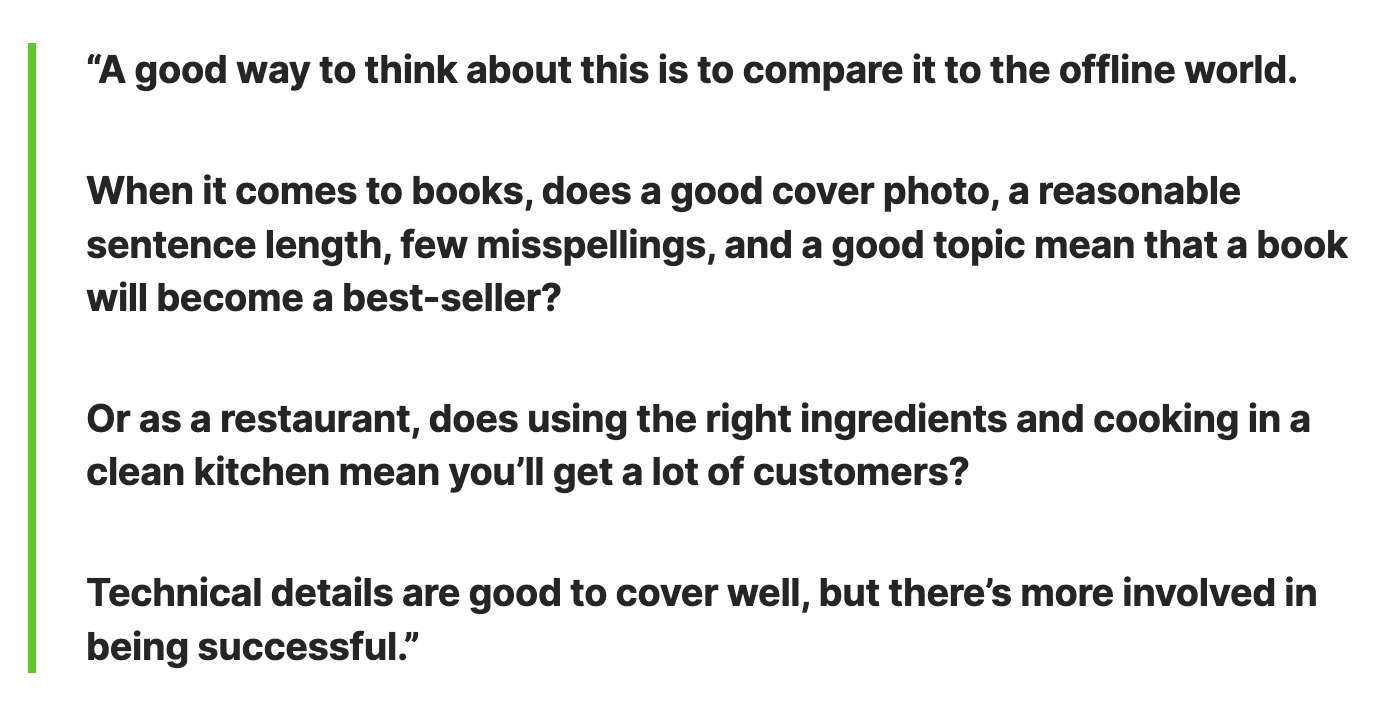
Google's John Mueller was once asked why a site was not ranking despite low competition and textbook SEO. His answer still holds, and it applies to AI-assisted content just as well: anyone can follow the recipe. The restaurants people queue for serve something the recipe does not cover.
AI as a working tool: where it pays
The other half of the story is AI inside the SEO work itself, and here the gain is real. Models are strong at finding patterns in large data sets, mapping topics and search intent, producing drafts and outlines, and taking over the repetitive steps in a process. Used properly, that buys back hours for the work that actually separates you from the field: analysis, prioritization, original material.
The tool's basic condition still applies. A model is trained on what already exists, so it pulls toward the average. It lifts the people who know precisely what they want, and it exposes the people who do not.
The trap: everyone using the same tool the same way
When a whole industry runs the same models on the same instructions, the content all lands in the same place, looking like the marketing that worked last year. What made that marketing work was that it stood out. So measure content on what it achieves rather than on how much of it you shipped. One good idea beats a hundred adequate ones, and content nobody uses is wasted time no matter how efficiently it was produced.
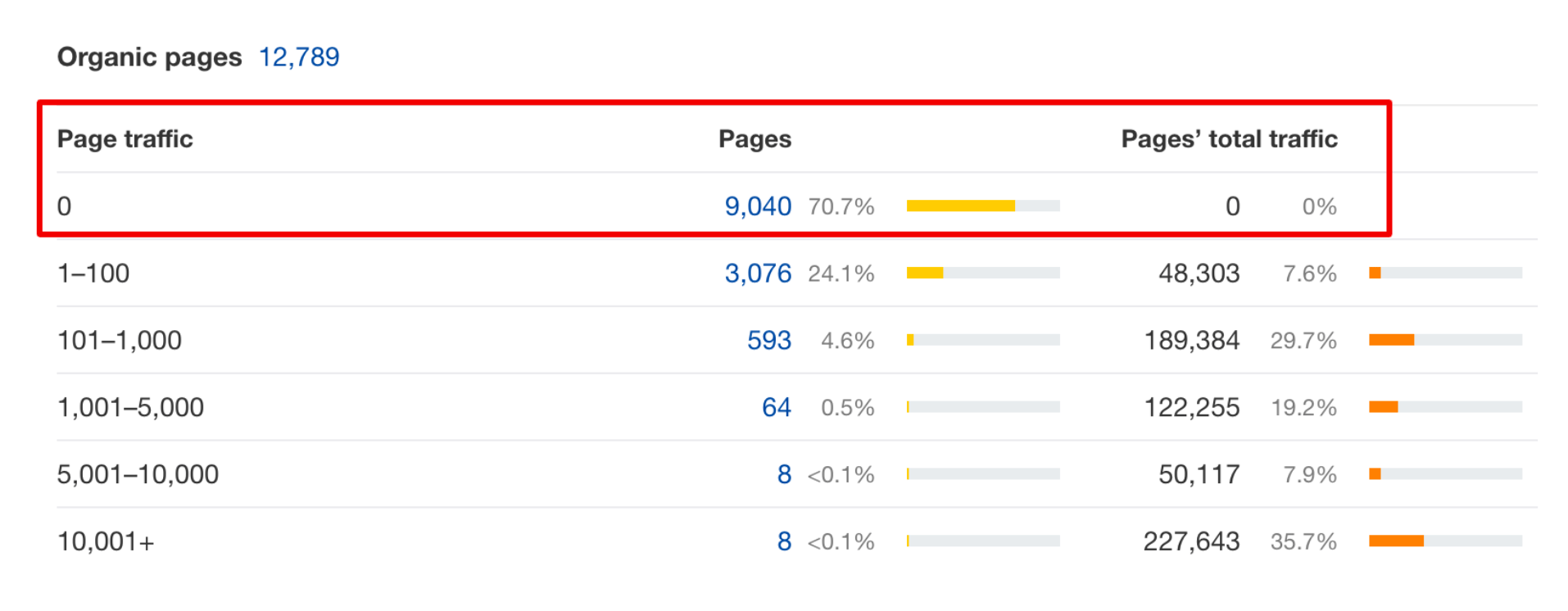
A practical check before you scale anything: list every URL on the site next to the organic traffic it earns. Most sites find that a large share of pages bring in nothing at all, and those pages are not neutral. Google's quality assessment works at site level, so thin pages linked into your good ones weigh the good ones down.
The same rule applies to generated content at scale. Test the template on a handful of pages, read the output the way a customer would, and only then roll it across a catalogue. A fault in the input becomes a fault on ten thousand URLs.
How we work with AI ourselves
Morrison, our own AI content ops platform, runs behind every client delivery. It reads the whole client website, learns the brand from the client's own documents and connects to performance data, built on 8+ years and 1,000+ client projects. The split is the point: Morrison supplies scale and consistency, while strategy, prioritization and professional judgement stay with people. AI is the tool behind the work, not the work.
Where to take it next
If you want to work concretely on visibility across the AI surfaces, AI search optimization and generative AI optimization turn everything above into a backlog with owners and deadlines. If you would rather see where you stand today, across classic search and AI search, start with a free SEO analysis. It is built by hand on your own market. The head start is still available, and it is yours to take.