Bing SEO
Bing runs its own index, its own ranking signals and the answers inside Microsoft Copilot. What Bing weighs differently, and how to work with it alongside Google.
Bing has spent most of its life as the search engine people mention and nobody optimizes for. That changed for a structural reason rather than a fashionable one: Bing's index is what Microsoft Copilot reads from, and Copilot sits inside Windows, Edge and Microsoft 365, where a large share of professional buyers spend their working day. Being absent from Bing's index now means being absent from a set of AI answers as well, which makes Bing part of SEO rather than a footnote to it.
The good news is how much of the work carries over. A site built properly for Google is most of the way to performing on Bing, and the differences are few enough to list.
What Bing weighs differently
Bing runs its own crawler, its own index and its own ranking systems, and the emphasis is not identical to Google's.
- Keyword and URL matching is more literal. Bing leans harder on exact terms appearing where it expects them: the title tag, the H1, the opening paragraph and the URL path. Google resolves synonyms and intent more aggressively; Bing rewards the page that says the thing plainly. This is one of the few places where deliberately clear titles and meta descriptions pay off twice.
- Click-through rate carries more weight. Bing has been open about using engagement as a relevance signal, including pogo-sticking, the pattern where a searcher opens a result, comes straight back and tries the next one. A title that promises what the page delivers is worth more here than a clever one.
- Social signals count. Shares and mentions on public social platforms feed into Bing's assessment in a way Google has consistently said they do not. It does not make social media a ranking lever, but it does mean coverage you already earn has a second use.
- Local and visual results are prioritized sooner. Bing surfaces local results on lighter signals and indexes images, video and audio more eagerly, so structured, well-labeled media has a shorter path to visibility.
None of that contradicts your Google work. It shifts the order in which the same fundamentals pay off.
Bing Webmaster Tools is the underused part
Bing Webmaster Tools is free, takes a DNS or meta-tag verification to set up, and gives you a view of your site that Google Search Console does not provide.
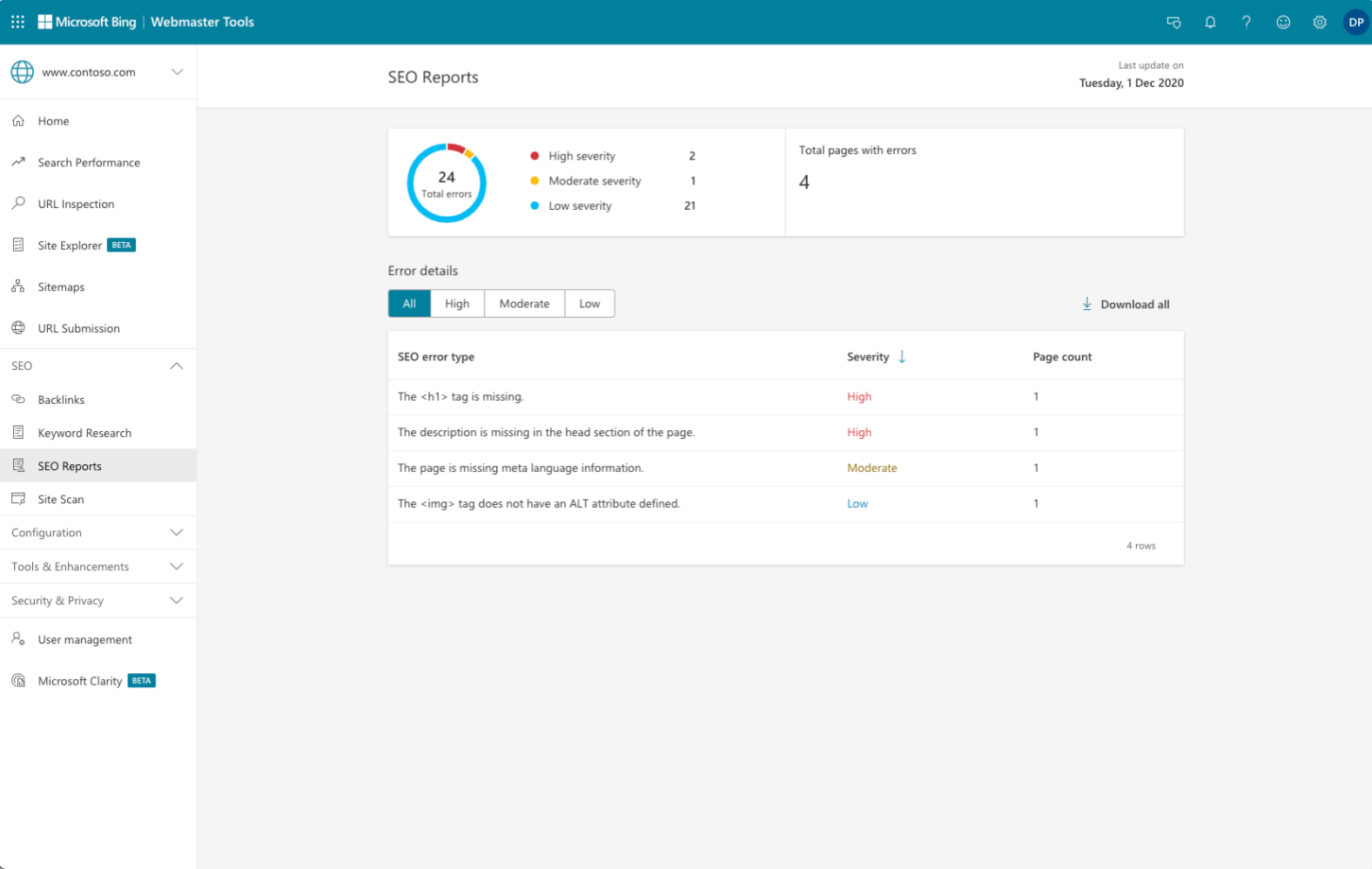
Three things are worth the login on their own:
A backlink report you did not pay for. Bing shows referring domains and anchor text for your own site and, unusually, for any domain you enter. For a first pass at a competitor's profile it holds up well against paid tools.
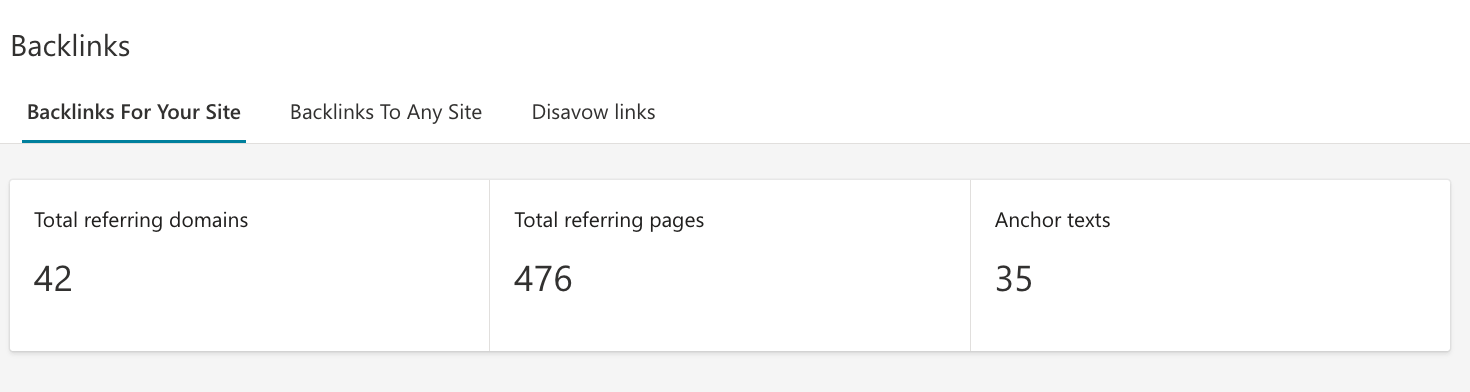
IndexNow. Bing's push protocol lets your CMS notify the index the moment a URL is published, changed or removed, instead of waiting to be crawled. It is supported by several other engines, and on a site that publishes often it removes a real delay from the loop. Most major CMS platforms have a plugin or a few lines of server code for it.
Its own crawl and error reporting. Crawl errors, blocked URLs and index coverage, reported from a crawler that is not Googlebot. When something is wrong with your robots.txt or your server responses, having two independent readings is what separates a genuine problem from a reporting quirk. The mechanics behind all of it are covered in our guide to crawling and indexing.
Where to put your effort
If you have not thought about Bing before, four moves cover most of the available upside.
- Verify the site in Bing Webmaster Tools and submit your sitemap. Then read the crawl report once properly. Sites that have never looked usually find something.
- Turn on IndexNow if your platform supports it, particularly for product pages, campaign pages and anything with a short shelf life.
- Check that your titles, H1s and URL paths state the subject in plain words. This is the single adjustment with the clearest effect on Bing, and it costs nothing on Google.
- Make sure the Bing crawler is not blocked. Bingbot, and the AI crawlers that draw on the same index, are blocked more often than anyone intends, usually by a CDN rule or a firewall setting nobody revisited. A blocked crawler makes the rest of the work invisible.
The Copilot connection
The reason to spend an afternoon on this in 2026 is not Bing's share of classic search, which remains modest next to Google's. It is that Bing's index is a supply line into AI answers. When Copilot cites a source, it is drawing on pages Bing has crawled and judged relevant. Being indexed, being clearly written and being unblocked are the entry requirements for both surfaces at once, which is why we treat Bing as part of AI search optimization rather than as a separate project. The wider picture of who else is worth your attention sits in our guide to alternative search engines, and the answer engine built on top of Bing has its own guide in Microsoft Copilot.
Want to know how your domain looks to a crawler that is not Googlebot? That is part of what we go through in a free SEO analysis, built by hand across classic search and AI search.